Motivation
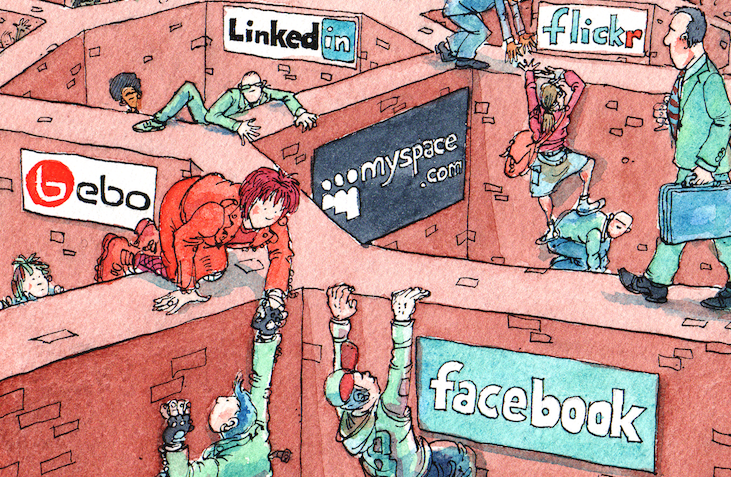
Vendor lock-in
Data silos
What we hope to achieve...
Creativity and innovation
Ability to add new features
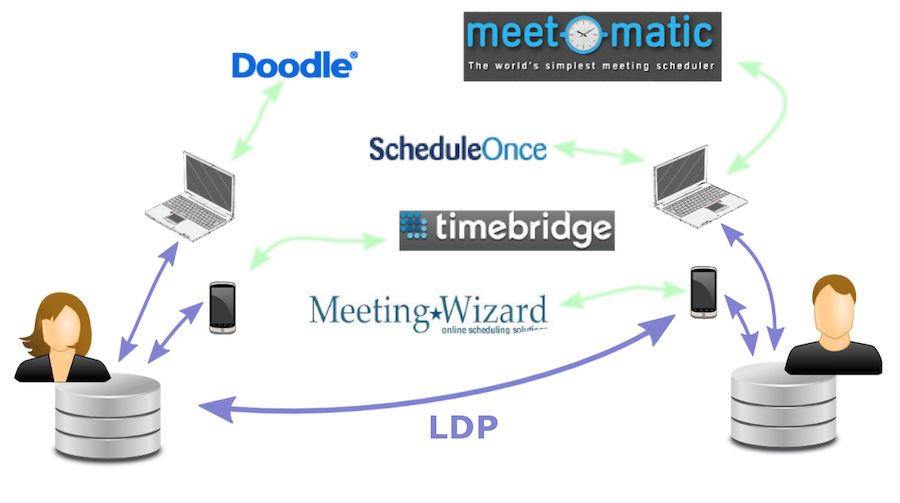
Example use-case
The building blocks
LDP - Linked Data Platform
- W3C Recommendation (end of February 2015)
- an architecture for read-write Linked Data on the Web
- defines a set of rules for RESTful HTTP operations on Web resources
- RDF
- non-RDF (e.g. text, binary)
- filesytem-like structure for data
- containers (folders)
- basic ("contains" resources)
- direct (different membership relations)
indirect(at risk)
- resources within containers (files)
- containers (folders)
Note: containers are also RDF resources!
Retrieving container information
GET /c1/ HTTP/1.1
Host: example.org
Accept: text/turtle
HTTP/1.1 200 OK
Content-Type: text/turtle
ETag: "8caab0784220148bfe98b738d5bb6d13"
Link: <http://www.w3.org/ns/ldp#BasicContainer>; rel="type"

@prefix dcterms: <http://purl.org/dc/terms/>.
@prefix ldp: <http://www.w3.org/ns/ldp#>.

<http://example.org/c1/>
   a ldp:BasicContainer;
   dcterms:title "A very simple container";
   ldp:contains <r1>, <r2>, <r3>.
Creating a new basic container
POST alice/ HTTP/1.1
Host: example.org
Content-Type: text/turtle
Link: <http://www.w3.org/ns/ldp/BasicContainer>; rel="type"
Slug: photos

@prefix ldp: <http://www.w3.org/ns/ldp#> .
@prefix dcterms: <http://purl.org/dc/terms/> .

<> a ldp:Container, ldp:BasicContainer;
   dcterms:title "Photos of Alice" ;
   dcterms:description "This container will contain photos of Alice." .
HTTP/1.1 201 Created
Location: http://example.org/alice/photos/
ETag: "fffab0784220148bfe98b738d5bb6a00"
Content-Length: 0
Creating a new resource
POST /alice/ HTTP/1.1
Host: example.org
Content-Type: text/turtle
Link: <http://www.w3.org/ns/ldp#Resource>; rel="type"

@prefix foaf: <http://xmlns.com/foaf/0.1/> .

<> a foaf:PersonalProfileDocument;
    foaf:primaryTopic <#me> .
<#me> a foaf:Person;
    foaf:name 'Alice Smith'  .
HTTP/1.1 201 Created
Location: http://example.org/alice/b0da1
ETag: "8caab0784220148bfe98b738d5bb6d13"
Link: <http://www.w3.org/ns/ldp#Resource>; rel="type"
Deleting a resource
DELETE /alice/foaf HTTP/1.1
Host: example.org
If-Match: "8caab0784220148bfe98b738d5bb6d13"
HTTP/1.1 204 No Content
Note: non-empty containers will not be deleted!
Discovering server support*
OPTIONS /alice/ HTTP/1.1
Host: example.org
HTTP/1.1 200 OK
Allow: GET, PUT, POST, OPTIONS, HEAD, DELETE, PATCH
Accept-Post: text/turtle;charset=utf-8,text/n3;charset=utf-8,text/nt;charset=utf-8,text/css;charset=utf-8,text/html;charset=utf-8,text/javascript;charset=utf-8,text/plain;charset=utf-8,application/rdf+xml;charset=utf-8,application/json;charset=utf-8,multipart/form-data,image/jpeg,image/jpeg,image/png,image/gif,font/otf
Link: <http://www.w3.org/ns/ldp#BasicContainer>; rel="type"
Optional headers:
Link: <http://example.org/alice/,acl>; rel="acl"
User: https://alice.example.org/profile/card#me
Access-Control-Allow-Methods: GET, PUT, POST, OPTIONS, HEAD, DELETE, PATCH
Access-Control-Allow-Origin: *
LDP recap
LDP 1.0
- full CRUD support through RESTful HTTP operations
- interation model driven by HTTP headers
- filesytem-like structure for data
Planned extensions (LDP 1.1)
- simple way of patching resources - LD Patch (REC track)
- paging (REC track)
- resource quering and filtering
Web Access Control
Web Access Control (WAC)
- decentralized access control system
- applies to Web resources (at the document level)
- integrates well with LDP
- users and groups identified by HTTP URIs (i.e. WebIDs)
- vocabulary: http://www.w3.org/ns/auth/acl
- access modes: Read / Write / Append / Control
- access can be restricted based on Origin
WAC resource discovery
HEAD /alice/ HTTP/1.1
Host: example.org
HTTP/1.1 200 OK
. . .
Link: <http://www.w3.org/ns/ldp#BasicContainer>; rel="type", <http://example.org/alice/,acl>; rel="acl"
WAC policy
GET /alice/,acl HTTP/1.1
Host: example.org
Accept: text/turtle
@prefix acl: <http://www.w3.org/ns/auth/acl#> .
@prefix foaf: <http://xmlns.com/foaf/0.1/> .

<#readall> a acl:Authorization ;
           acl:accessTo <.> ;
           acl:mode acl:Read ;
           acl:agentClass foaf:Agent .
<#acl> a acl:Authorization ;
           acl:accessTo <> ;
           acl:mode acl:Read, acl:Write ;
           acl:agent <foaf#me>; .
Web Identity and Discovery
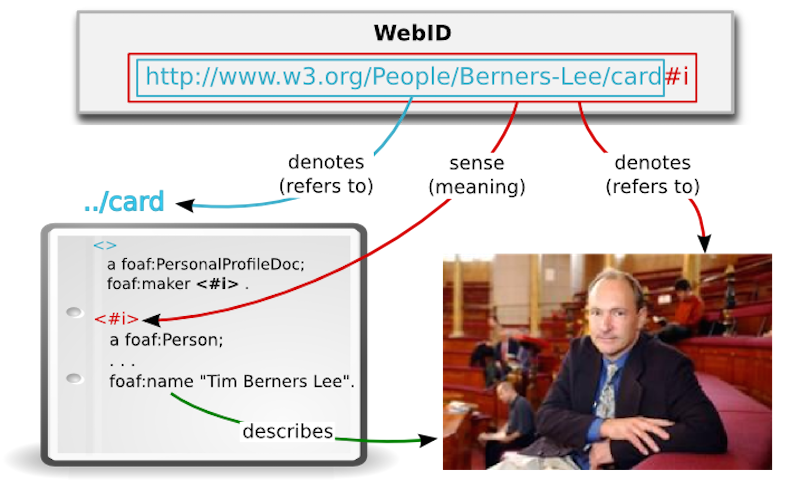
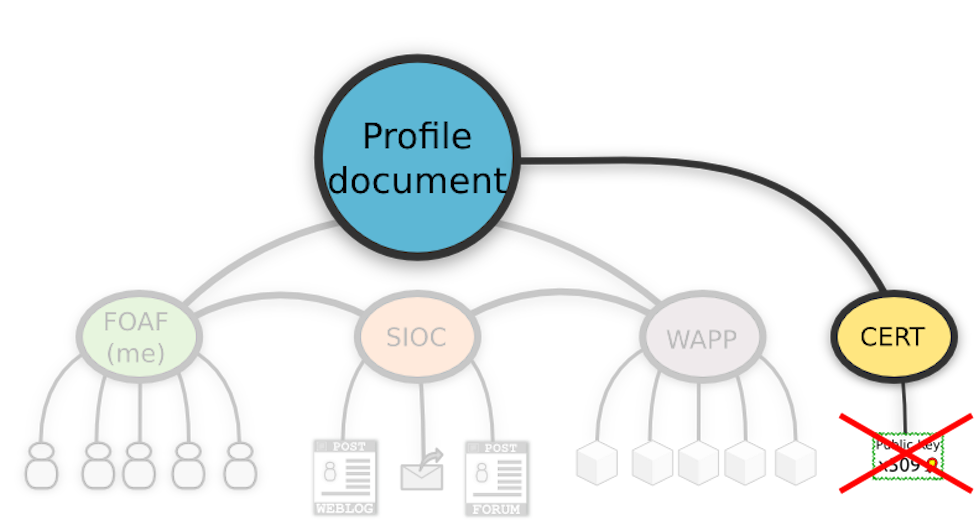
WebID
- user-controlled identification mechanism
- decentralized (Web scale)
- openly extensible
- standards-based interoperability (HTTP, LDP, RDF)
- components:
- the WebID (URI)
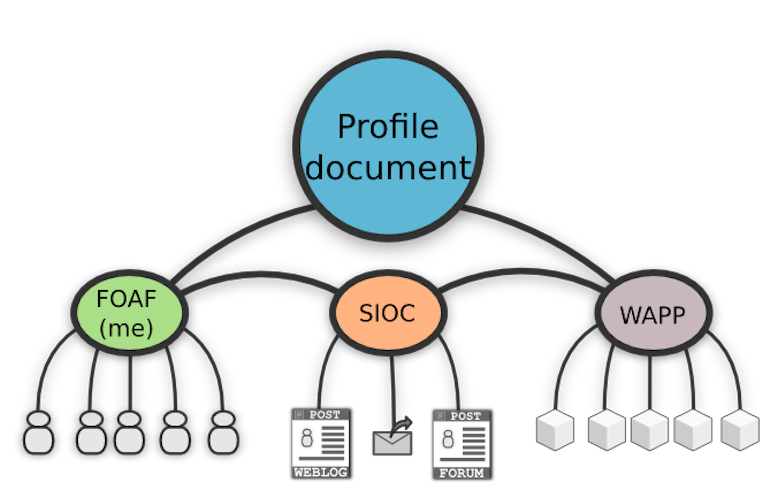
- the WebID profile (RDF)
- in the process of standardization (Community Group)
The WebID (URI)
The WebID profile
WebID-TLS
Secure authentication using WebID
WebID-TLS
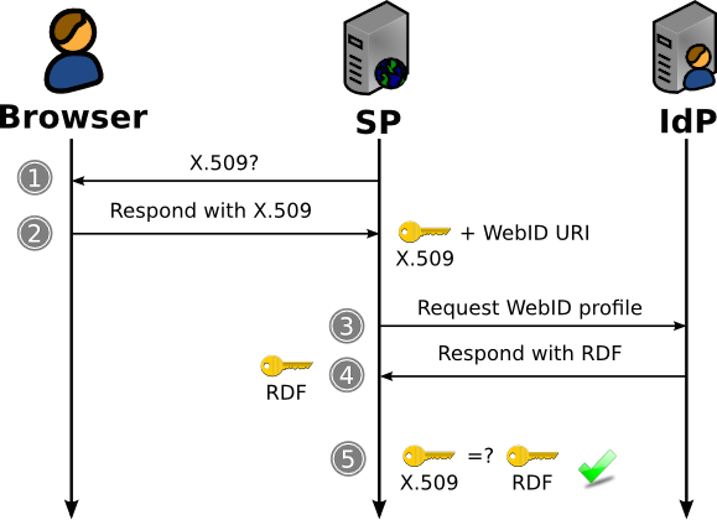
- decentralized, secure and efficient authentication on the Web
- uses client certificates to avoid insecure passwords
- certificates do not depend on PKIs and Certification Authorities
- easy to implement - reuses existing technologies (TLS, HTTP, RDF)
- components:
- WebID
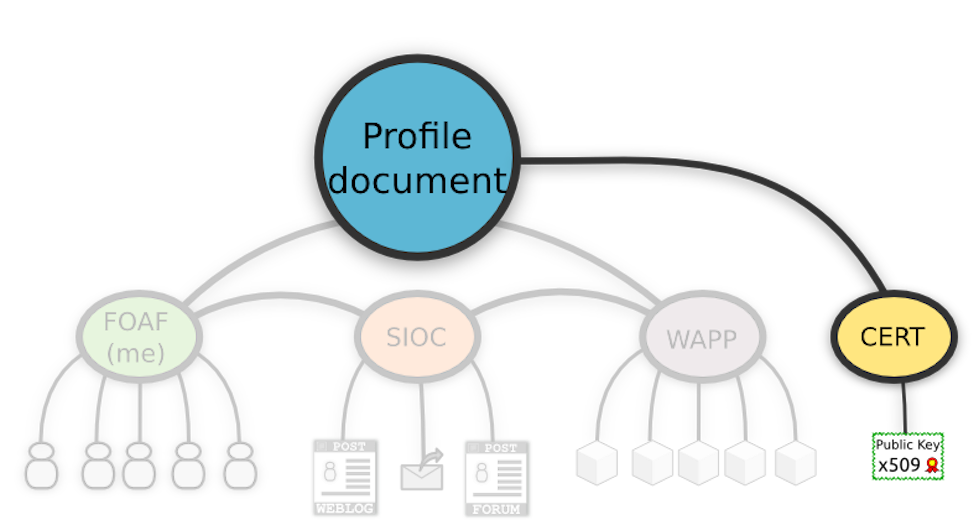
- X.509 client certificate
- also a work-in-progress open standard
WebID-TLS - X.509 client certificate
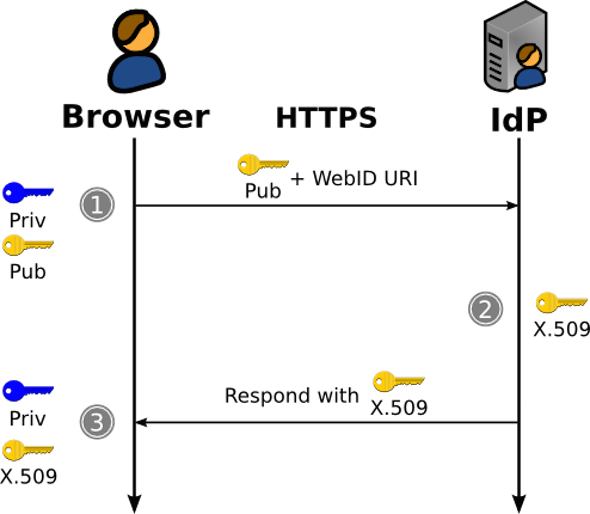
- happens during the initial HTTPS (TLS) handshake
- bootstraps the identification process (discovery)
- X509v3 extension - Subject Alternative Name (contains the WebID)
- can be self-signed (but classic PKI can still be used)
- uses HTML5's <keygen> element to generate keys locally in the browser
WebID-TLS - issuing the cert
WebID-TLS - linking the cert
WebID-TLS - revoking the cert
WebID-TLS - authentication
Example apps
Authentication & signup
Authentication - custom events
Widget:
WebIDAuth : { details: {
                auth: string, // type of auth method (e.g. WebID-TLS)
                success: bool, // true if auth was successful
                user: string // the WebID of the user
              } }
App:
window.addEventListener('WebIDAuth',function(e) {
  if (e.details.success === true) {
    webid = e.datails.user; // set some App-specific user variable
  } else {
    console.log("Auth failed!");
  }
},false);
New WebID accounts are set up with
- a personal (Linked) Data space -- e.g https://user.example.org/
- WebID -- e.g. https://user.example.org/profile/card#me
- WebID profile
- default workspaces -- e.g. Public, Private, Work, Family, etc.
- preferences file; may contain all kinds of useful data (e.g. preferred language, date format, apps, etc.
WARP - Personal data space browser
CIMBA - decentralized microblogging
LD-cal - calendar / events
100% decentralized
Why switch to client-side apps?
- run locally, browser extension or anywhere on the Web
- privacy-aware* -- p2p between browser and data spaces
- takes advantage of social graphs
- does not trap data within silos
- very extensible (leads to feature-rich apps)
- uses the Web as an OS:
- file system-like storage (LDP)
- data reused in multiple apps
* if it passes (your) privacy/security audits
TODO
TODO
- extend LDP with:
- indexing & search
- filtering
- real-time notifications!
- app store
- privacy audits for apps
- easy discovery & recommendations
- and finally...
</Presentation>
News/announcements list:
crosscloud-announce@csail.mit.edu
Slides available at:
Links
- Our MIT general Linked Data Github repository
- GOLD (LDP server written in Go)
- node-ldp-httpd (LDP server based on node.js)
ldphp (LDP server written in php)- WebID Login/Signup
- WARP LDP resource browser
- CIMBA Microblogging app
- Boilerplate app (generic LD starter app using Angular)
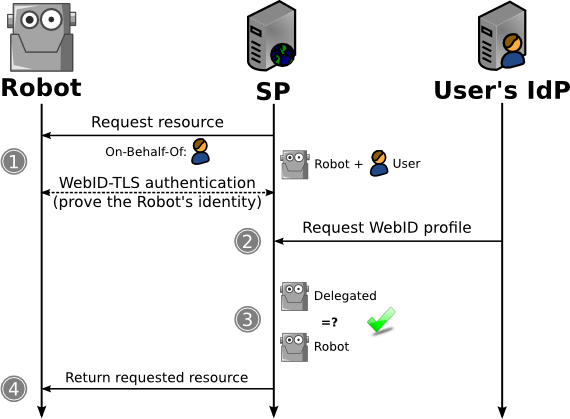
WebID-TLS -- delegated authentication
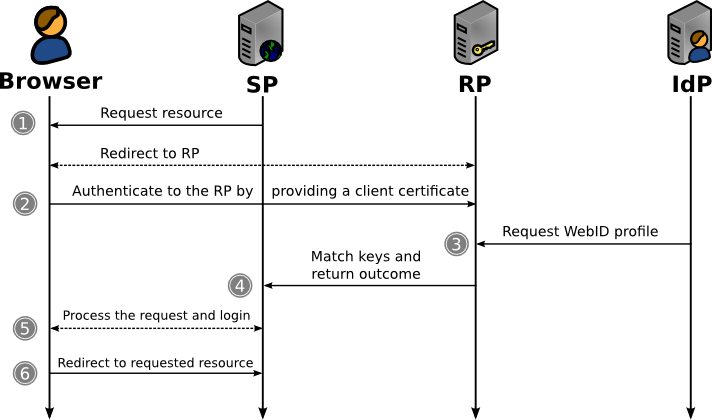
WebID -- access delegation